
When a customer places a phone call, they expect it to connect instantly.
They don’t see the complex network of carriers, SIP trunks, routing platforms, and interconnects operating behind the scenes.
For telecom providers, ensuring that the network can handle thousands of simultaneous calls without degradation is critical.
At CloudBunch, we recently designed and built a bespoke VoIP load testing platform for a global SIP trunk provider that needed a way to simulate real-world traffic patterns across multiple countries, time zones, and routing profiles.
The result was a carrier-grade testing platform capable of generating thousands of calls while continuously validating network performance, route quality, and service availability.
The Challenge
Traditional load testing tools often focus on generating large volumes of traffic.
The problem is that real customer traffic isn’t evenly distributed.
Traffic varies by:
- Country
- Time zone
- Business hours
- Weekdays versus weekends
- Carrier routes
- CLI presentation requirements
- Destination number allocations
The client needed a platform capable of accurately modelling how real traffic behaves across a global VoIP network.
They wanted to answer questions such as:
- Can the network sustain thousands of concurrent calls?
- Which routes experience the highest failure rates?
- Are calls dropping during peak traffic periods?
- How does performance vary between countries?
- Can new carrier routes be validated before going live?
Designing the Call Planning Engine
One of the most important features we built was an intelligent call planning engine.
Rather than randomly generating calls, the platform allows traffic to be distributed based on realistic business patterns.
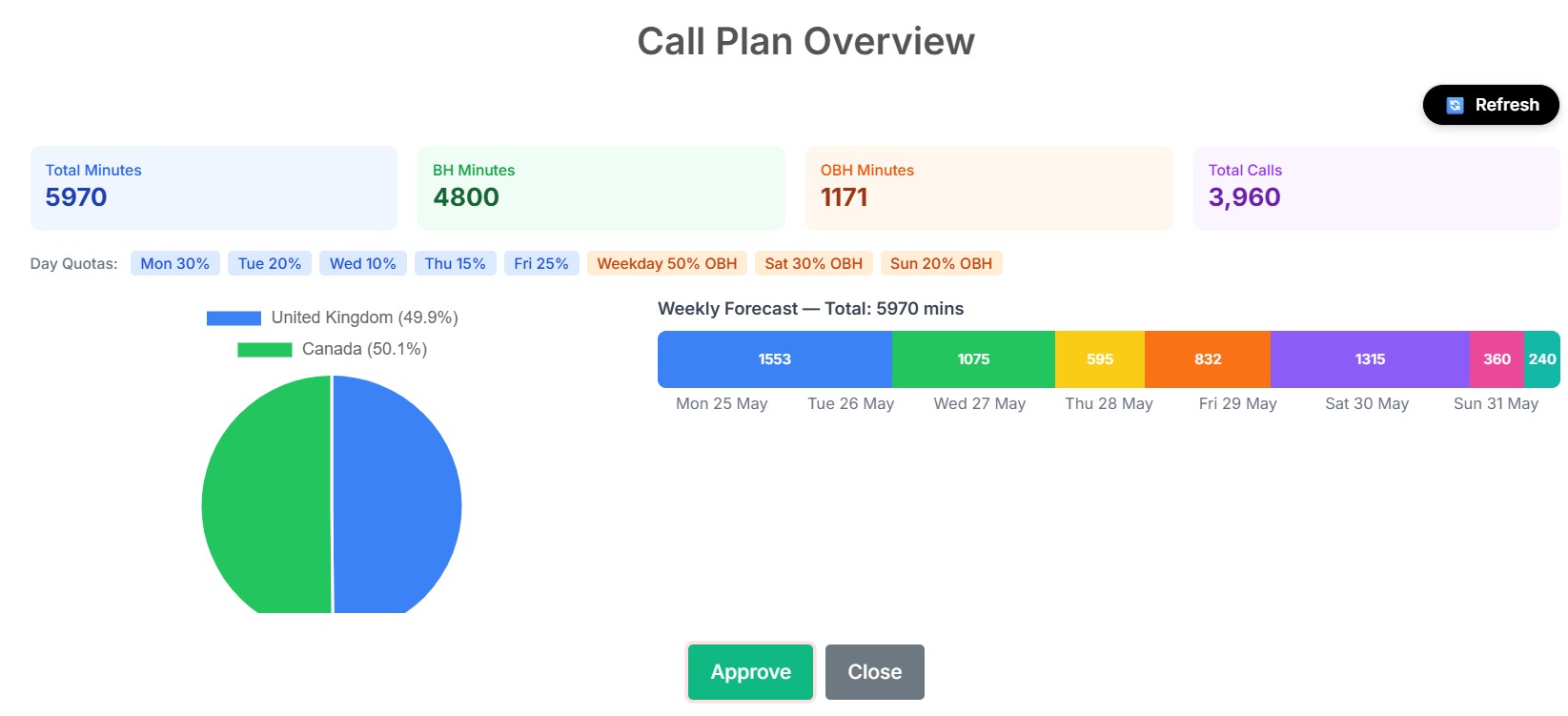
In the example below, 6,000 minutes are allocated across the United Kingdom and Canada.
The system automatically calculates:
- Business hour (BH) traffic
- Out-of-business-hour (OBH) traffic
- Daily traffic distribution
- Call volumes by country
- Weekly forecasting
This ensures generated traffic closely mirrors production workloads.
Call Plan Overview
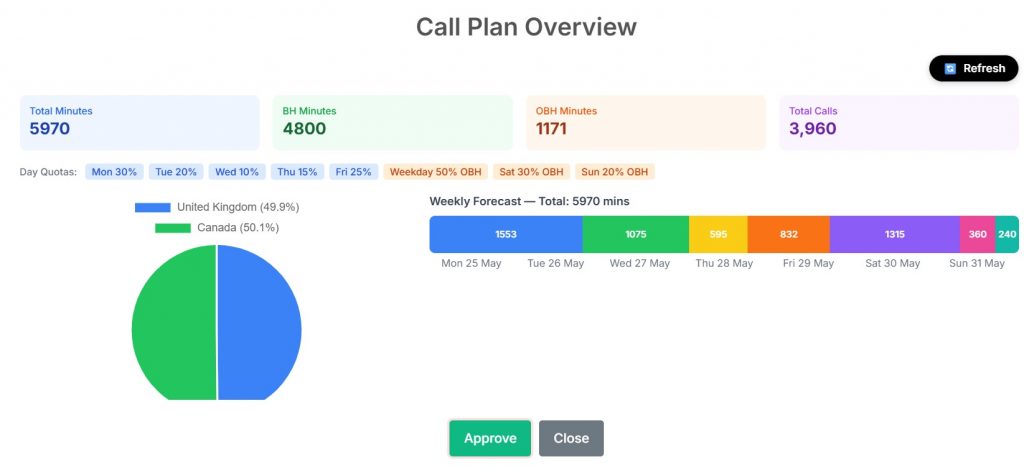
The dashboard provides a clear visual breakdown of:
- Total planned minutes
- Business hour allocation
- Out-of-hours allocation
- Forecasted call volume per day
- Country-based traffic distribution
Multi-Country Testing
Telecom providers rarely operate within a single market.
The platform includes country management capabilities that allow engineers to define:
- Country prefixes
- Business hour windows
- Local operating times
- Route-specific behaviour
- Regional traffic allocation
Country Management
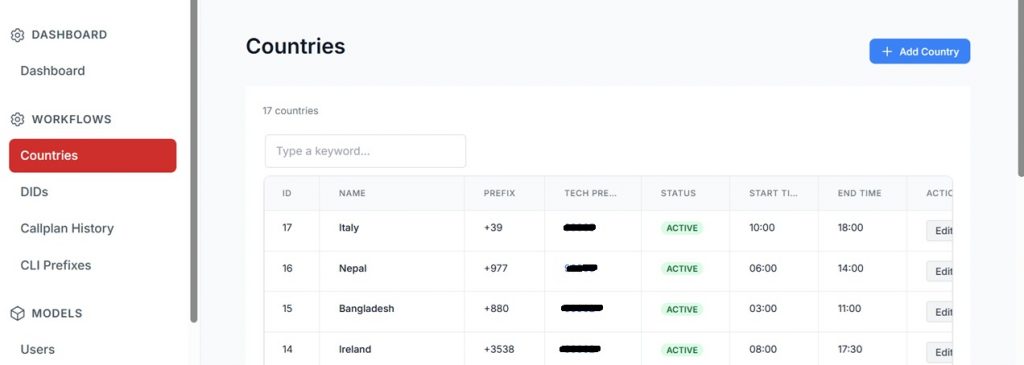
In the example shown, countries such as:
- Italy
- Nepal
- Bangladesh
- Ireland
have unique operating windows configured.
This allows the platform to automatically schedule traffic according to local business hours.
Time Zone Aware Load Generation
One of the biggest challenges in VoIP testing is accurately modelling customer behaviour.
A customer in London and a customer in Tokyo will not generate traffic at the same time.
Our scheduling engine automatically considers:
- Local country time zones
- Business hours
- Weekend traffic patterns
- Peak-hour traffic concentrations
The result is a realistic traffic simulation rather than an artificial load spike.
Weekly Traffic Distribution
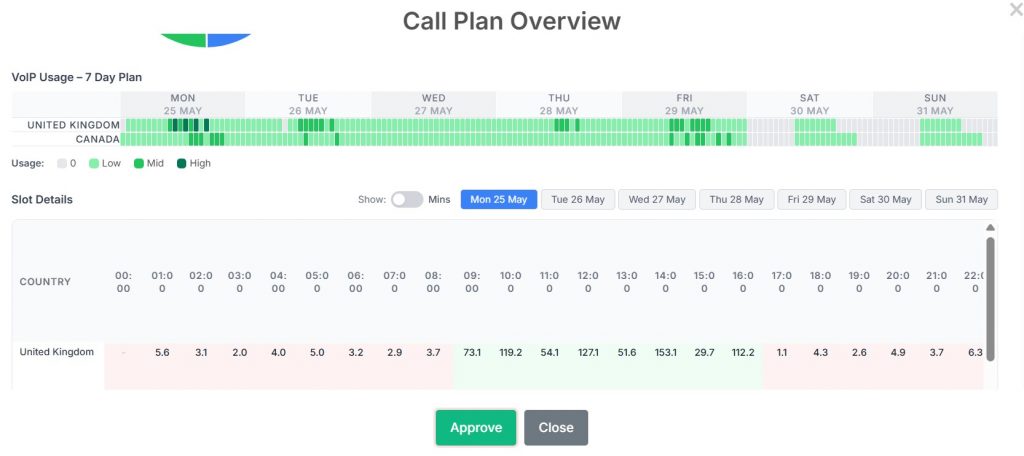
The platform visualises traffic intensity throughout the week, making it easy to identify:
- Peak load periods
- Traffic concentration windows
- Country-specific demand patterns
- Network stress periods
Dynamic CLI Presentation
Many telecom providers require different caller IDs depending on the destination country.
To support this, we built a dedicated CLI management system.
CLI Prefix Management
The platform allows providers to:
- Assign country-specific caller IDs
- Configure multiple CLI pools
- Rotate caller identities
- Match destination routes automatically
This enables more realistic testing while complying with carrier requirements.
Technology Prefix Routing
Different customers often utilise different carrier profiles and routing strategies.
To support this, we implemented technology prefix management.
Technology Prefix Management
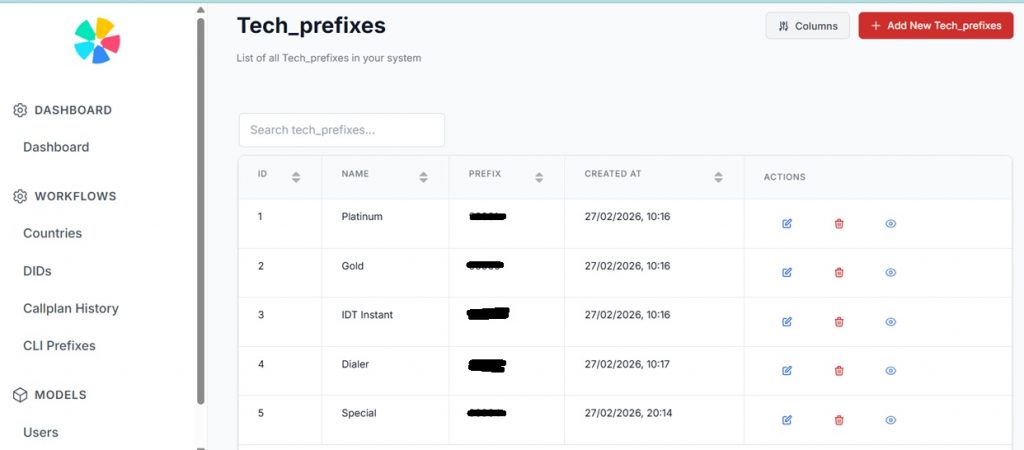
Examples include:
- Platinum Routes
- Gold Routes
- Instant Dial Routes
- Special Routes
Each route profile can be tested independently, enabling engineers to validate performance before production deployment.
Large-Scale DID Management
Generating realistic traffic requires large destination pools.
The platform includes bulk DID management capabilities allowing thousands of test numbers to be imported and organised automatically.
DID Management
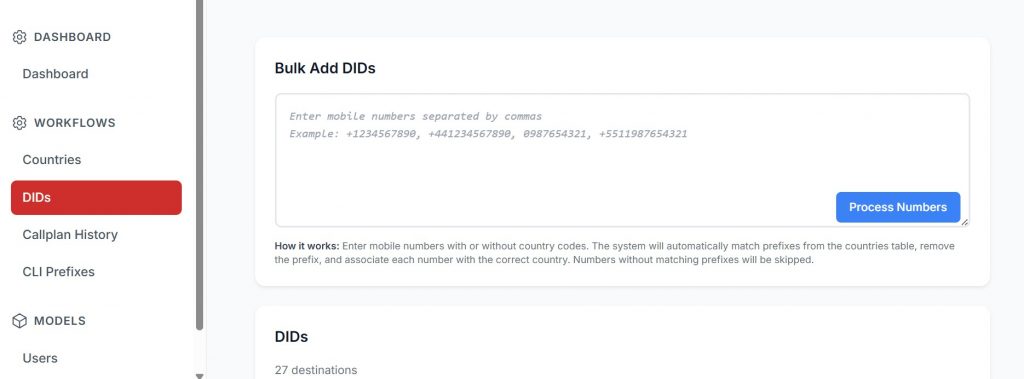
Numbers are automatically:
- Classified by country
- Matched against prefixes
- Assigned to destinations
- Prepared for campaign generation
This removes the manual effort typically associated with large-scale test preparation.
Historical Analysis and Reporting
Testing is only valuable if the results can be analysed.
Every generated campaign is stored for future review.
Call Plan History
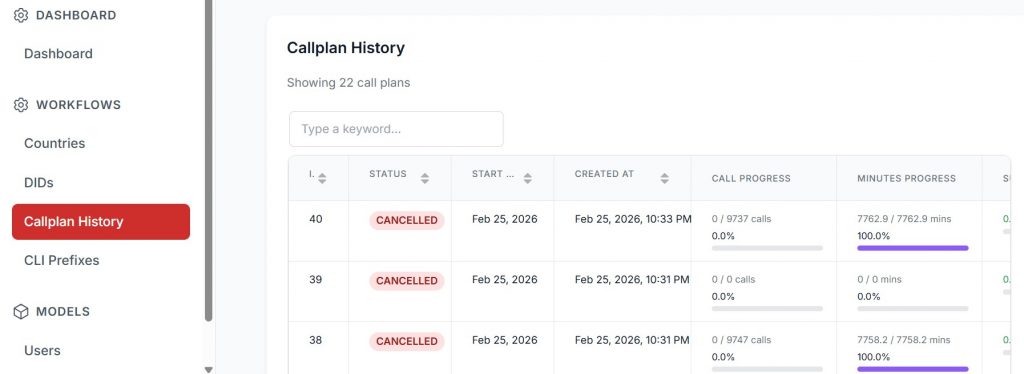
Engineers can review:
- Historical campaigns
- Minutes consumed
- Call completion statistics
- Success rates
- Failure rates
- Route performance trends
This provides a clear audit trail and allows long-term network performance tracking.
Detecting Failures Before Customers Do
The primary goal of the platform is to identify issues before they impact production traffic.
During load tests the platform monitors:
- SIP response codes
- Failed call attempts
- Early disconnects
- Route failures
- Call setup times
- Concurrent call limits
- Capacity bottlenecks
Engineers can quickly identify problem routes and take corrective action before customers are affected.
Built for Scale
The platform was designed from the ground up to support carrier-grade workloads.
Key capabilities include:
- Multi-country testing
- Time zone aware scheduling
- Concurrent call generation
- Dynamic CLI management
- Technology prefix routing
- Historical analytics
- Real-time monitoring
- Automated call planning
By combining these features into a single platform, SIP providers gain a powerful tool for validating network performance under realistic operating conditions.
The Outcome
What started as a requirement to generate calls evolved into a complete VoIP load testing ecosystem.
The platform now enables providers to simulate global customer traffic, validate carrier routes, monitor network health, and identify issues long before they reach production.
For telecom operators, that means greater confidence, improved reliability, and a better customer experience.
At CloudBunch, we specialise in building bespoke telecoms, VoIP, and SaaS platforms tailored to operational requirements.
If your business needs a custom load testing platform, carrier validation solution, telecom automation system, or VoIP management portal, we’d love to discuss how we can help.